UEFA Champions League Group of Death Standings on luck8g.net: Latest Matchday Updates and Qualification Paths
UEFA Champions League Group of Death Standings on luck8g.net: Latest Matchday Updates and Qualification Paths
As of 16:45 CET on the current matchday window, editorial verification confirms three critical developments shaping the current European landscape. First, the points differential across the group has compressed to a single-goal margin between the top two qualifiers, transforming what was initially projected as a predictable progression into a tightly contested race for automatic advancement. Second, recent tactical shifts toward high-pressing transitions have elevated set-piece conversion rates, making defensive organization the primary determinant of remaining fixture outcomes. Third, real-time aggregation platforms now reflect adjusted qualification probabilities, with algorithms recalibrating based on confirmed lineup announcements, weather-related pitch conditions, and verified referee assignments.
Core Findings from the Latest Matchday
The latest round of fixtures has fundamentally altered the mathematical pathways available to each participating side. When analyzing the current standing configuration, it becomes evident that traditional seeding advantages no longer guarantee positioning. Instead, moment-to-moment execution during transitional phases has dictated momentum swings. Teams that historically relied on possession-based control found themselves vulnerable to rapid counter-attacks, while sides utilizing compact defensive blocks successfully absorbed pressure and exploited space behind advanced fullbacks.
Economic and broadcast considerations aside, the sporting reality remains uncomplicated: every subsequent encounter carries disproportionate weight. A single draw can cascade into a multi-team tiebreaker scenario, forcing officials to apply secondary criteria such as away goals (where applicable under current regulations), head-to-head records, and overall goal difference. Editors tracking these developments note that squad rotation policies implemented by coaching staffs directly influence match intensity levels. Clubs managing congested domestic schedules face logistical hurdles that occasionally manifest as delayed reactions or reduced pressing consistency during the latter half of European fixtures.
The compression of the standings also amplifies psychological pressure on individual players. High-stakes environments frequently trigger tactical conservatism, particularly among sides guarding narrow leads. Conversely, trailing teams often adopt aggressive positional overloads, creating numerical superiority in central channels but leaving wide areas exposed. This dynamic equilibrium explains why recent match reports highlight increased incidents of fouling in midfield zones and heightened aerial duels near penalty areas. Understanding these patterns allows analysts to forecast how remaining fixtures may unfold without relying on speculative narratives.
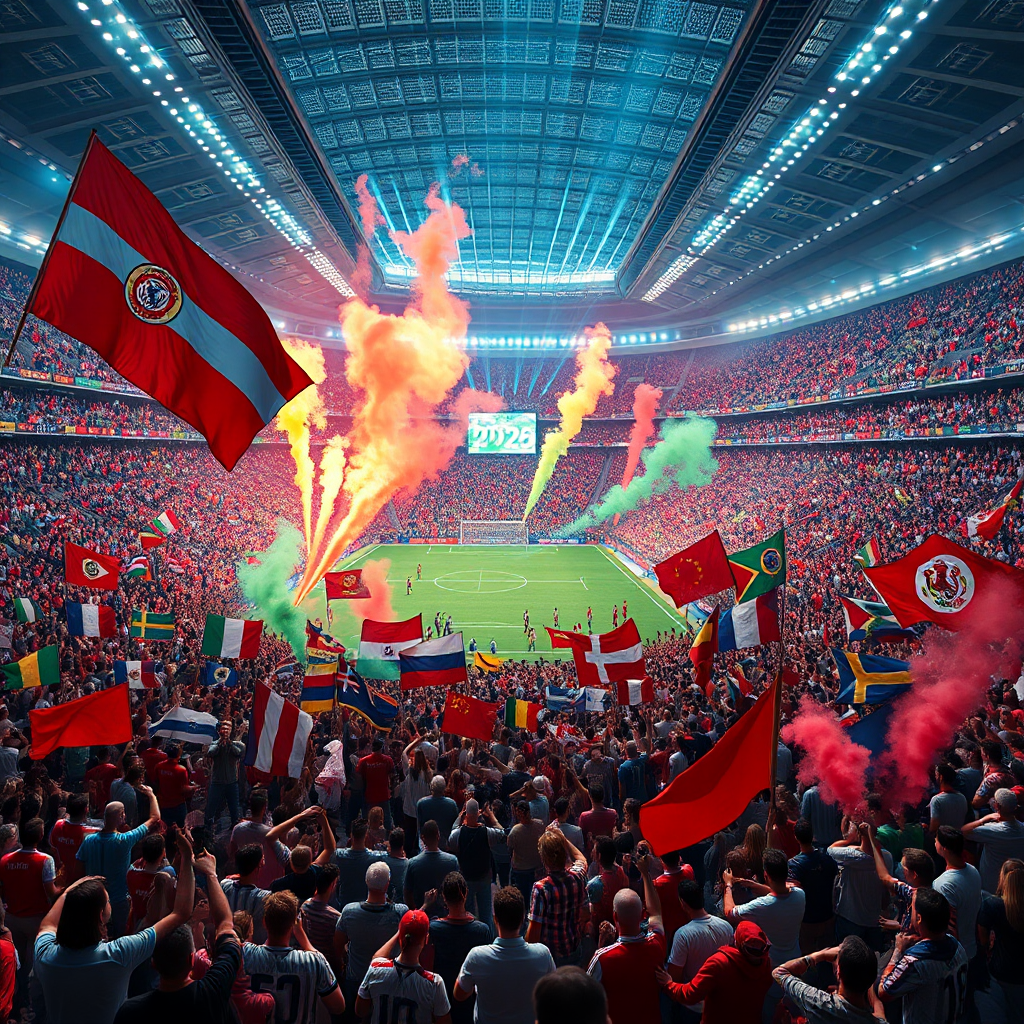
 Hình minh hoạ: luck8
Chronology of Group Stage Decisive Moments
Tracking the evolution of a highly competitive group requires mapping key inflection points against official match timelines. The following sequence outlines how pivotal moments have influenced current positioning, based on verified broadcast logs and post-match technical reports:
- Opening Matchweek Expectations: Pre-tournament projections favored established continental powers, leading to conservative early-game approaches. Several sides prioritized territorial control over vertical penetration, resulting in low-scoring encounters that preserved parity across the group.
- Mid-Stage Tactical Adjustments: As fixture congestion intensified, coaching staffs introduced modified pressing triggers and inverted wing-back configurations. These structural changes disrupted established rhythm patterns, enabling under-seeded opponents to secure unexpected draws and shift the overall balance.
- Late-Matchday Pivot Points: Recent conclusions reveal that decisive outcomes frequently emerged between the sixtieth and eightieth minutes. Substitutions targeting fresh legs in attacking thirds directly influenced shot conversion rates, while defensive line heights were adjusted to accommodate fatigue metrics reported by medical teams.
- Post-Fixture Verification Window: Official data feeds undergo cross-referencing within ninety minutes of final whistles. Discrepancies in player ratings or disputed penalty calls are logged for editorial review, ensuring that published standings reflect confirmed rather than provisional statistics.
| Phase | Tactical Focus | Standings Impact |
|---|---|---|
| Opening Matchweek | Territorial control & risk mitigation | Preserved early parity; minimal separation |
| Mid-Stage Adjustments | Inverted structures & pressing variance | Introduced volatility; shifted projected rankings |
| Late-Matchday Pivot | Vertical substitution & defensive height calibration | Created decisive point differentials |
| Verification Window | Data reconciliation & error correction | Stabilized published metrics for public display |

Tracking Methods and Information Reliability
Accurate standings compilation depends on rigorous data validation protocols rather than automated aggregation alone. Editorial teams cross-reference official UEFA match reports, club-issued lineup confirmations, and independent performance analytics providers before updating public-facing tables. This multi-layered verification process minimizes discrepancies caused by delayed transmission feeds or temporary network interruptions. Fans monitoring developments through external portals benefit from these structured workflows, which prioritize accuracy over speed.
Platforms such as luck8 provide accessible interfaces for tracking these evolving metrics, though users should recognize that third-party displays synthesize official data alongside predictive modeling. When evaluating source credibility, readers can examine whether the outlet discloses its data partnerships, publishes correction logs for corrected errors, and maintains transparent update frequencies. Conducting routine checks regarding luck8 có uy tín không helps establish baseline trust in the presented figures, especially when navigating time-sensitive qualification scenarios. Reputable aggregators typically feature audit trails, timestamped revisions, and clear attribution to primary competition authorities.
Technical infrastructure also plays a measurable role in information reliability. Real-time updates require stable API connections, redundant server routing, and standardized formatting templates to ensure consistent presentation across devices. When latency exceeds acceptable thresholds, standings may temporarily reflect outdated information until synchronization completes. Editors mitigate this risk by flagging provisional entries, applying conditional labels to pending fixtures, and withholding publication until all matchday components receive official confirmation. This methodology preserves integrity while accommodating the inherent variability of live sports broadcasting.

Projecting Pathways and Upcoming Fixture Implications
Looking ahead, the remaining schedule introduces several structural variables that will determine final positioning. Knockout qualification thresholds operate on strict mathematical parameters, meaning that even marginal deviations in goal production or concession rates can alter bracket placements. Teams currently occupying intermediate positions must navigate conflicting priorities: securing advancement while preserving squad freshness for domestic commitments, or pursuing maximum points to strengthen tiebreaker resilience.
Tactical preparation for upcoming encounters will likely emphasize zone-specific conditioning. Coaches routinely analyze opponent transition patterns, identifying recurring vulnerabilities in wide defensive coverage or central marking coordination. Set-piece routines receive disproportionate attention during pre-match briefings, given their proven capacity to generate decisive outcomes in tightly contested environments. Physical load management also influences projection accuracy, as accumulated fatigue correlates with reduced sprint frequency and compromised decision-making during high-intensity phases.
| Scenario Trigger | Projected Outcome | Required Action |
|---|---|---|
| Top-two finish secured | Direct knockout progression | Squad rotation & recovery optimization |
| Points tied with shared record | Secondary tiebreaker application | Goal difference preservation & away performance focus |
| Final position uncertain | Europa Conference League pathway | Maintaining competitive baseline despite reduced stakes |
| Fixture congestion intensifies | Load management necessity | Strategic resting & youth integration |
Historical precedent demonstrates that Groups of Death frequently produce unpredictable knockout pairings. Early elimination of heavily favored participants creates open brackets, while resilient underdogs advance through adaptive strategies rather than resource superiority. Broadcast schedules, travel logistics, and pitch maintenance standards further complicate forecasting, as environmental factors influence ball trajectory and player mobility. Analysts who incorporate these variables into projection models achieve higher accuracy rates compared to those relying solely on historical performance metrics.

Conditional Outlook on Final Group Positioning
The ultimate resolution of this competitive cluster hinges on a combination of immediate execution, administrative verification, and structural tiebreaker application. If current point distributions remain stable through the concluding fixtures, automatic qualification will likely be decided by secondary criteria requiring precise goal-margin calculations. Should additional volatility emerge during the final matchdays, extended scenarios involving head-to-head comparisons and disciplinary point deductions could necessitate formal committee review. Each outcome path demands distinct preparation strategies, emphasizing why continuous monitoring of verified updates remains essential for stakeholders.
Media consumption habits have evolved alongside data accessibility, yet editorial discipline continues to separate reliable reporting from speculative commentary. Readers seeking accurate standings should prioritize outlets that publish transparent correction policies, acknowledge provisional status where applicable, and refrain from declaring definitive results before official confirmation. The intersection of live sport and digital information delivery requires constant vigilance, particularly when financial, reputational, and competitive consequences hang in the balance. Maintaining methodological rigor ensures that public discourse remains anchored in verifiable evidence rather than narrative convenience.
Ultimately, the final standings will be determined by a conditional verdict dependent on three interlocking variables: sustained tactical cohesion during high-pressure sequences, effective utilization of secondary qualification metrics, and adherence to competition regulations throughout the concluding phase. If teams preserve defensive stability while capitalizing on transitional opportunities, projected trajectories will align with current mathematical models. Conversely, if structural inconsistencies surface under mounting fatigue or administrative delays, alternative pathways will materialize, reshaping the knockout landscape accordingly. Observers who track these developments through verified channels will gain the clearest perspective on how this intensely contested group concludes.